FILM IN KYRGYZSTAN / Production guide
EN/RU
Guides→ Discuss your project
←Back to the production guide
  1. Film in Kyrgyzstan
  2. Guides
  3. Nepal vs Kyrgyzstan
03Nepal vs KyrgyzstanUpdated: 2026-10-21

Nepal or Kyrgyzstan: where to film the Himalaya, high valleys and mountain villages?

Nepal has the real thing: 8 of the world's 14 eight-thousand-metre peaks, Everest at 8,848.86 m, the temple cities of the Kathmandu Valley and Sherpa villages. Kyrgyzstan gives the high-mountain look by road: plateaus at 3,000-3,500 m, 7,000 m peaks visible from the car, nomad camps instead of trekking lodges, and kit rental in Bishkek. If the frame must show Everest, prayer flags and monasteries, film in Nepal. If you need empty high valleys, glaciers and big peaks on a schedule that does not depend on helicopters and the monsoon, Kyrgyzstan is worth a look.

The short answer

The two countries complement each other in the calendar. Nepal's monsoon officially runs from June to September (in 2026 it lasted from 19 June to 14 October), and the best filming months are October-November and spring. That is exactly when the high pastures, passes and plateau lakes of Kyrgyzstan are at their best: Son-Kul is open for shooting from about June to September. A summer production that needs high mountains does not have to wait for Nepal's autumn.

When Nepal is the better choice

  • The highest mountains on earth: Everest, Kangchenjunga, Lhotse, Makalu, Cho Oyu, Dhaulagiri, Manaslu and Annapurna.
  • Living temple cities: seven UNESCO monument zones in the Kathmandu Valley, from the Durbar Squares to Bauddhanath and Pashupati.
  • Buddhist and Hindu culture as it is, not as set dressing: monasteries, prayer flags, Sherpa villages.
  • Experience with big productions: Marvel's Doctor Strange started principal photography in the Kathmandu Valley in November 2015; Everest filmed in Lukla and at Base Camp in 2014; Himalaya (1999) was shot in Dolpo and nominated for an Oscar.
  • Camera rental in Kathmandu, including ARRI Alexa Mini and RED.

When Kyrgyzstan is the better choice

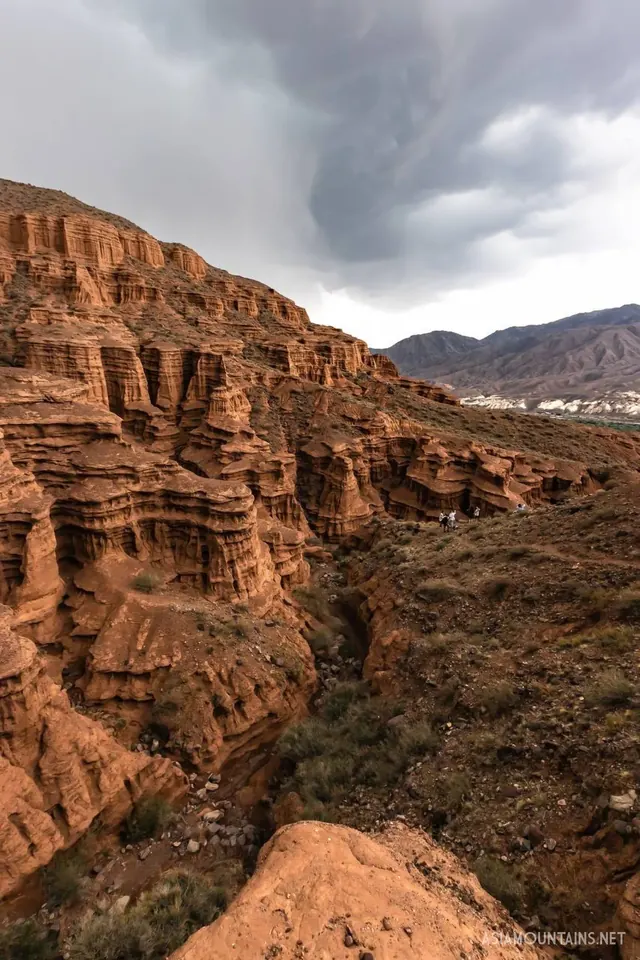
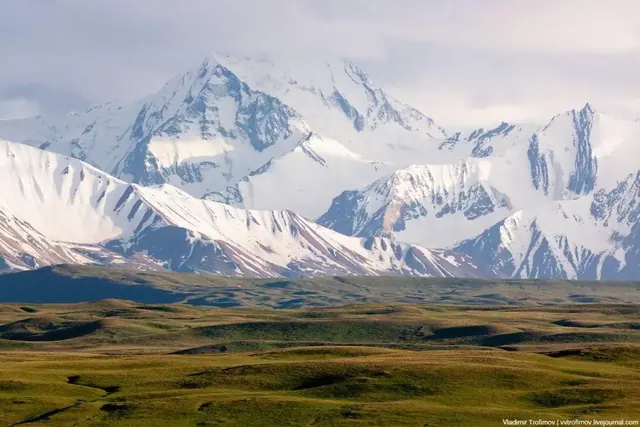
  • High ground you can drive to: the Alay Valley at about 3,000 m with Lenin Peak (7,134 m) on its south side, Son-Kul at about 3,000 m, Chatyr-Kul at about 3,500 m, the Kuldzha-Bashi canyon at about 3,500 m.
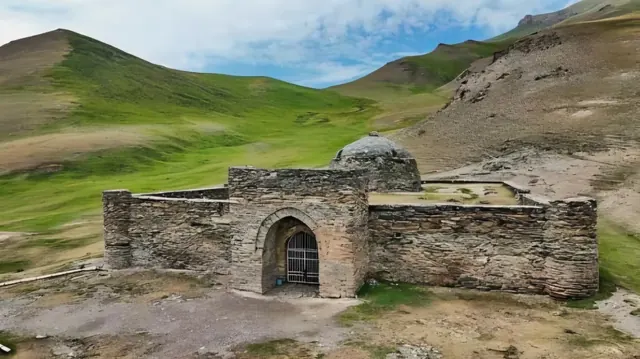
  • Stone architecture in empty valleys: the caravanserai of Tash-Rabat above 3,200 m reads as a Himalayan or Tibetan building on screen.
  • Fewer fees per location: in Nepal conservation areas charge foreign productions $1,500, Upper Mustang and Upper Dolpa $5,000 each, and drone filming adds 25%; a government liaison officer accompanies international productions, at the production's cost.
  • A known price: about $2,600 for a 12-hour day with a crew of 13 and an ARRI Alexa Mini LF package. Nepal has no cash rebate (the Film Development Board chair said so in April 2026) and no reliable published crew rates; 13% VAT applies to production costs.
  • Roads instead of flights: Kathmandu to Pokhara is about 200 km and takes 8-10 hours, and in 2026 a landslide closed the highway from 26 August to 18 September; Jomsom and Lukla depend on early-morning flights. In Kyrgyzstan most high locations are reached by road within a day or two from Bishkek or Osh.

Where Kyrgyzstan plays the high Himalaya

All four are reached by road; plan days for acclimatisation.

Alay Valley, OshOsh · 821 km · 12.4 h

Alay Valley

A high plateau at about 3,000 m with Lenin Peak on the horizon
Chatyr-Kul Lake, NarynNaryn · 497 km · 7.1 h

Chatyr-Kul Lake

A lake on a bare plateau at about 3,500 m

What Kyrgyzstan does not have

No eight-thousanders, no Everest in the background, no monasteries or prayer-flag villages: those would need set dressing or a second unit in Nepal. Altitude is real in both countries: above about 2,500 m unacclimatised crew members are at risk of altitude sickness, so the schedule needs acclimatisation days.

Working there

Nepal: the permit is granted by the Ministry of Communication and Information Technology through a local coordinator, who applies on the producer's behalf; the Film Development Board issues the letter to customs for temporary import of equipment. Ordinary locations take about a week, national parks and heritage sites up to two, drones longer. Tourist visas are issued on arrival ($30 for 15 days, $50 for 30, $125 for 90), but filming is allowed only with the film permit. Direct flights to Kathmandu: Istanbul (about 7 h), Dubai (about 4 h), Doha, Delhi.

Kyrgyzstan: citizens of the EU, the UK and the USA enter visa-free for 30 days in every 60. Istanbul to Bishkek takes about 5 h 10 min. There is no direct flight between Bishkek and Kathmandu; connections go through Dubai, Istanbul or Delhi. Kyrgyzstan is not part of the ATA Carnet system, so most crews rent kit in Bishkek.

Sources

  1. Film Development Board Nepal: filming in Nepal (2026)
  2. Film Development Board Nepal: leaflet (2020)
  3. Department of Immigration Nepal: visa information (2026)
  4. Ratopati: interview with the FDB chair (2026)
  5. FOCAL: working conditions in Nepal (2026)
  6. Kathmandu Films: camera rental in Nepal (2026)
  7. Kathmandu Films: permits in Nepal (2026)
  8. Department of Hydrology and Meteorology Nepal: monsoon (2022)
  9. The Kathmandu Post: Prithvi Highway collapse (2026)
  10. CDC Yellow Book: high-altitude travel (2025)
  11. Wikipedia: Eight-thousander (2026)
  12. Wikipedia: Doctor Strange (2016) (2026)
  13. Wikipedia: Everest (2015) (2026)
  14. Wikipedia: Himalaya (1999) (2026)
  15. Wikipedia: Lenin Peak (2026)
  16. Wikipedia: Alay Valley (2026)

Frequently asked questions

01Do you need a permit to film in Nepal?

Yes. Foreign productions get a permit from the Ministry of Communication and Information Technology through a local coordinator; conservation areas, restricted areas such as Upper Mustang and drones have separate fees.

02How much does it cost to film in Nepal's restricted areas?

Upper Mustang and Upper Dolpa charge $5,000 each, conservation areas $1,500 for foreign productions, plus 25% for drone filming (Film Development Board).

03Where can you film a Himalaya look outside Nepal?

In Kyrgyzstan: the Alay Valley under Lenin Peak, the At-Bashy district with Tash-Rabat and the Kuldzha-Bashi canyon, all reached by road.

04When is the best time to film in Nepal and in Kyrgyzstan?

Nepal: October-November and spring, outside the June-September monsoon. Kyrgyzstan's high locations: roughly June to September.

Didn’t find the right location?

We can run a location scout specifically for your script.

Order a location scout→

Updated: 2026-10-21

←Back to the production guideDiscuss your project→