 Naryn · 296 km · 4.9 h
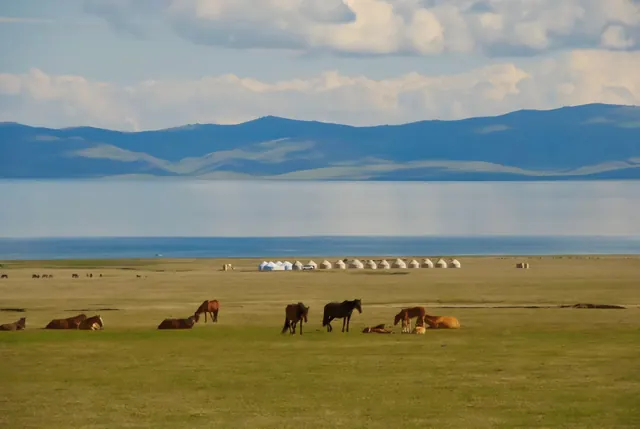
Son-Kul Lake
Yurts on a summer pasture by a plateau lake at about 3,000 m
Mongolia is the original: 1.56 million km², 5.1 million horses, the Gobi and a cash rebate of up to 45% written into law. Kyrgyzstan is the compact version: yurts and herds on summer pastures with glaciers and 7,000 m peaks behind them, red canyons a few hours away, crew and camera rental in Bishkek and a published shooting-day price of about $2,600. If the script needs sand dunes or the sheer emptiness of the Gobi, go to Mongolia. If it needs nomadic life against mountains, on a tighter schedule and budget, look at Kyrgyzstan.
Both countries still live with horses and yurts, so neither needs a dressed set to show nomads. The difference is scale and distance. Mongolia is one of the emptiest countries on earth, about two people per square kilometre, and its signature landscapes are far apart: the dunes of Khongoryn Els are about 180 km from Dalanzadgad, which is itself a flight or a 6-7 hour drive from Ulaanbaatar. In Kyrgyzstan the steppe, the lakes, the glaciers and the canyons sit inside one mountain system: Son-Kul is about 5 hours from Bishkek, Suusamyr about 3, the red canyons 2-5.
Nomad life here comes with mountains in the background; there is no sand desert.
Naryn · 296 km · 4.9 hYurts on a summer pasture by a plateau lake at about 3,000 m
 Chuy · 163 km · 2.7 h
A wide valley with herds, about 150 km long
 Issyk-Kul · 305 km · 4.9 h
Meadows of the World Nomad Games ethno-village, room for a large camp
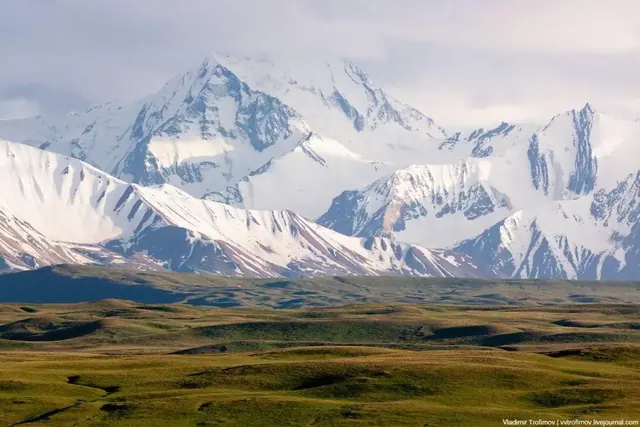 Osh · 821 km · 12.4 h
A cold high plateau under Lenin Peak
Mongolia: foreign crews need a filming permit from the Film Council; the law asks for the application at least 14 days before filming, with synopsis, schedule and locations, and the Council decides within 10 days. Crew members go through accreditation and a working or K4 film visa: visa-free entry for EU and UK citizens (up to 30 days, extended until the end of 2026) and US citizens (up to 90 days) covers tourism, not work. Mongolia accepts ATA Carnets. Small drones under 25 kg fly under Part 101 rules: daylight, line of sight, up to 120 m, at least 4 km from aerodromes.
Kyrgyzstan: citizens of the EU, the UK and the USA enter visa-free for 30 days in every 60. Kyrgyzstan is not part of the ATA Carnet system, so most crews rent kit in Bishkek. Every drone with a camera is registered with the civil aviation agency, which takes up to 10 working days, so we start before you arrive. Filming permits for your locations are arranged by us as part of the production plan.
There is no direct flight between Bishkek and Ulaanbaatar at the moment; connections go through Almaty or Astana (Almaty to Ulaanbaatar about 4 h 15 min). A production that needs both the Gobi and high mountains can shoot the desert in Mongolia and the mountain-steppe and canyon scenes in Kyrgyzstan.
Netflix's Marco Polo played Mongolia in Kazakhstan, Italy and Malaysia; Sergei Bodrov's Mongol (2007) was shot mainly in China and Kazakhstan. Films really shot in Mongolia include The Eagle Huntress (2016), The Story of the Weeping Camel (2003) and Harbin (2024). In Kyrgyzstan, horse games, eagle hunters and nomad camps have been filmed for Netflix's Home Game (2020), BBC and ITV travel series and the documentary Beyond the Silk Road (2026). Eagle hunting exists in both countries: both are part of UNESCO's multinational falconry element.
Choose the countryNepal or Kyrgyzstan: where to film the Himalaya, high valleys and mountain villages?The real Himalaya against high ground you can drive to, and a season that fills Nepal's monsoon gap.Read→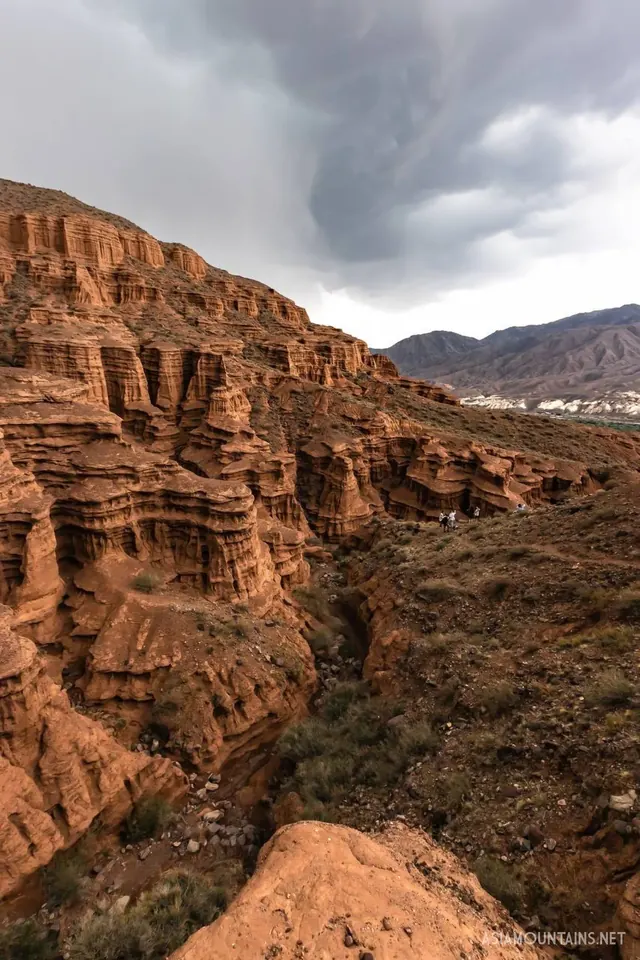 Find the lookWhat can Kyrgyzstan double for on screen?The Swiss Alps, Iceland, Tibet, the Mongolian steppe, Patagonia and the American Southwest in one country.Read→
 Choose the countryFilming in Central Asia: which country for which shot?Kyrgyzstan, Kazakhstan, Uzbekistan and Tajikistan: which country for which shot.Read→
We can run a location scout specifically for your script.
Updated: 2026-10-21