 01
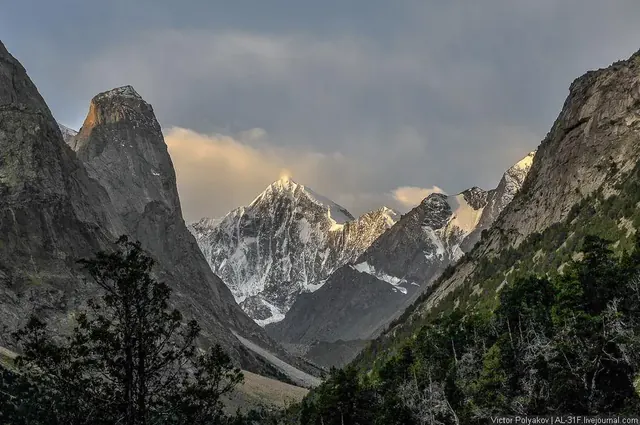
Karavshin Gorge
Karavshin in the Turkestan Range of the Leilek district is known among climbers as the 'Asian Patagonia': monolithic granite big walls above wild river valleys. The road ends at the village of Uzgurush, from where the base camp is about 2.5 days on foot with horses over the passes. The stable season is July to September.
 02
Madygen Geopark
Madygen is a state nature monument of 8,160 hectares in the Sary-Too massif of the Batken district, 18 km west of the village of Samarkandek, near the Tajik border. Coloured Triassic hills (235-222 million years old) have yielded more than 20,000 fossil insects and reptiles; in 2026 the site was recognised as geological heritage of global significance. Inside the canyons a 4x4 is needed; the season is April to October.
 03
Kan Fortress
Kan Fortress is the ruin of a Kokand-era fortress above the village of Kan (1,824 m) in the upper Sokh valley of the Batken district, 60 km south of Batken: rammed-clay walls up to 2.7 m high with round corner towers, moats and loopholes, on a site of several hectares. Sources date it between the 17th and mid-19th century. The village lies near the Tajik border, so the border regime should be checked when planning.
 04
Ay-Kul Lake
Ay-Kul, the 'moon lake', is a crescent-shaped landslide lake at about 2,915 m on the northern slope of the Turkestan Range in the Leilek district, inside the Sarkent national park about 20 km south of Razzakov (Isfana). Most of its shore is sheer rock, so the whole lake is seen only from the passes or from the south. There is no road: the approach from the village of Golbo is a multi-day trek on foot or horseback, and the area is a border zone with Tajikistan that needs a pass. Frozen from late October to March.
 05
Kan-i-Gut Cave
Kan-i-Gut is an ancient silver mine turned labyrinth in the northern foothills of the Turkestan Range: about 1,500 years of mining, a mention in the works of Avicenna, and around 6 km of surveyed passages on several levels.